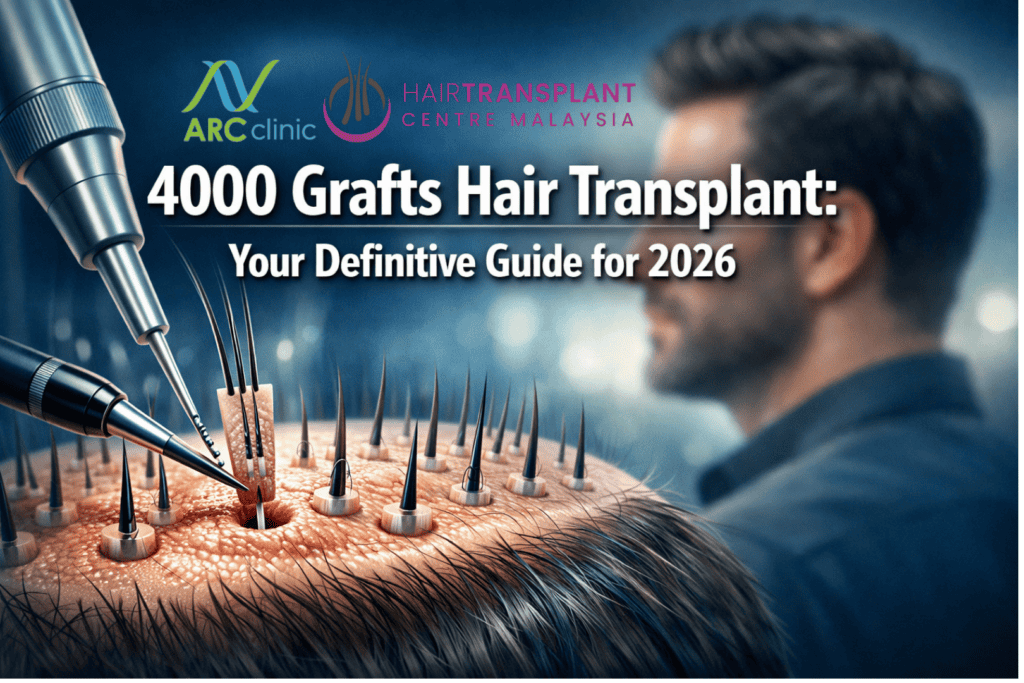
Quick Answer: A 4000 grafts hair transplant is a significant hair restoration procedure typically recommended for individuals experiencing moderate to advanced hair loss, corresponding to Norwood Scale 4 to 5. This procedure involves carefully extracting and implanting approximately 4000 follicular units to restore density across larger areas such as the receding hairline, mid-scalp, and crown, aiming for comprehensive and natural-looking results.
Key Takeaways:
- A 4000 grafts hair transplant addresses moderate to advanced hair loss, often covering large areas of the scalp.
- The primary techniques used are Follicular Unit Extraction (FUE) and sometimes Follicular Unit Transplantation (FUT).
- Candidates usually fall within Norwood Scale 4 or 5 and possess a robust donor area.
- The procedure typically takes a full day, or sometimes two, depending on the chosen technique and clinic protocol.
- Recovery involves initial scabbing, shedding, and then gradual regrowth, with final results visible around 12-18 months.
- Cost varies significantly based on factors like clinic location, surgeon’s expertise, and the specific technique employed.
- Choosing an experienced surgeon and a reputable clinic like Hair Transplant Centre Malaysia is crucial for optimal outcomes.
- Proper post-operative care is essential to ensure graft survival and healthy hair growth.
- Realistic expectations regarding density and hairline design are vital for patient satisfaction.
What is a 4000 Grafts Hair Transplant and Who Needs It?
A 4000 grafts hair transplant is a hair restoration procedure where roughly 4000 follicular units—small clusters of 1 to 4 hairs—are harvested from a donor area, typically the back or sides of the scalp, and meticulously implanted into areas experiencing baldness or thinning. This number of grafts is generally suited for individuals with moderate to significant hair loss who require extensive coverage to achieve a denser, more complete head of hair.
Individuals who typically benefit from a 4000 grafts hair transplant often present with noticeable balding across several scalp regions. These include a significantly receded hairline, considerable thinning or balding in the mid-scalp, and a visible bald patch at the crown. On the Norwood Scale, which classifies male pattern baldness, candidates for a 4000 grafts procedure are usually categorized as Norwood Scale 4 or 5. A Norwood 4 patient, for instance, has significant recession at the temples and a sparse or bald spot at the crown, with a bridge of hair separating the two. A Norwood 5 patient shows even more extensive balding, where the band of hair across the top of the head is significantly thinner or completely gone, creating a larger bald area. The key factor, beyond the extent of hair loss, is having a sufficiently dense and healthy donor area to yield 4000 viable grafts without compromising its integrity.
How Many Hairs Does 4000 Grafts Represent?
Four thousand grafts typically represent between 8,000 to 10,000 individual hair strands, though this number can vary depending on the average number of hairs per follicular unit in the donor area. Each graft, or follicular unit, naturally contains between 1 to 4 hair follicles.
Understanding the hair count is essential because it directly impacts the perceived density after a transplant. For example, if a patient’s donor area yields grafts with an average of 2.5 hairs per unit, then 4000 grafts would translate to approximately 10,000 individual hairs (4000 grafts x 2.5 hairs/graft). Surgeons meticulously plan the distribution of these grafts, placing single-hair grafts at the hairline for a natural look and multi-hair grafts in areas requiring more density, such as the mid-scalp or crown. This strategic placement ensures not only coverage but also a natural aesthetic outcome that avoids a “pluggy” appearance.
What Areas Can a 4000 Grafts Hair Transplant Cover?
A 4000 grafts hair transplant can effectively cover substantial areas of hair loss, including a severely receded hairline, significant thinning or balding in the mid-scalp, and a large bald spot at the crown. This extensive coverage allows for comprehensive restoration across the top of the head.
For many individuals, hair loss doesn’t affect just one isolated area. A 4000 grafts procedure is powerful enough to tackle multiple zones. For example, a patient might need 1500 grafts for a new hairline, 1500 grafts to increase density in the frontal-mid scalp, and another 1000 grafts to address a thinning crown. This level of grafting allows for a balanced approach, creating a uniform density that blends seamlessly with existing hair. The exact distribution of grafts is determined during a detailed consultation, where the surgeon assesses the patient’s specific balding pattern, facial structure, and desired outcome. This personalized approach is critical for achieving natural-looking results and patient satisfaction. For more insights on assessing your needs, consider reading “How Many Grafts Do I Need? A Simple Guide to Your Hair Transplant Consultation” (https://www.hairtransplantcentremalaysia.com/how-many-grafts-do-i-need-a-simple-guide-to-your-hair-transplant-consultation/).
The Procedure: FUE vs. FUT for 4000 Grafts
For a 4000 grafts hair transplant, Follicular Unit Extraction (FUE) is generally the preferred method due to its minimally invasive nature and lack of linear scarring, although Follicular Unit Transplantation (FUT) can also be used, particularly if a very large number of grafts are needed and the patient prioritizes maximum yield.
Follicular Unit Extraction (FUE)
FUE involves individually extracting follicular units directly from the donor area using a micro-punch tool, leaving tiny, dot-like scars that are almost imperceptible. Each graft is carefully harvested and then implanted into recipient sites created by the surgeon.
- Process: Hair is usually shaved in the donor area. The surgeon uses a specialized punch tool (0.7mm to 1.0mm in diameter) to extract individual follicular units. These grafts are then prepared and sorted under magnification. Finally, tiny incisions are made in the recipient area, and the grafts are meticulously placed according to the planned hairline and density.
- Benefits: Less invasive, no linear scar, quicker recovery time for the donor area, suitable for patients who prefer to wear their hair short.
- Considerations for 4000 Grafts: A 4000-graft FUE procedure is extensive and can take one or even two full days to complete, requiring significant skill and stamina from the surgical team. The donor area must be robust enough to provide this many grafts without over-harvesting, which could lead to visible thinning in the donor region. Hair Transplant Centre Malaysia’s Dr Ashrul Ikhmal is a member of the FUE Europe Society, demonstrating expertise in this technique.
Follicular Unit Transplantation (FUT)
FUT involves surgically removing a strip of skin containing hair follicles from the donor area, typically the back of the head. This strip is then dissected under microscopes into individual follicular units, which are then implanted.
- Process: A strip of scalp tissue is surgically removed from the donor area. The incision is then closed, leaving a linear scar. Highly skilled technicians then dissect the strip into thousands of individual follicular units. These grafts are implanted into the recipient areas in the same manner as FUE.
- Benefits: Can yield a larger number of grafts in a single session, often with a higher graft survival rate in some cases, and may be less expensive per graft.
- Considerations for 4000 Grafts: While effective for large sessions, the linear scar left by FUT may be a concern for patients who want to keep their hair very short. The recovery time for the donor area can also be longer and more uncomfortable.
Choosing between FUE and FUT for a 4000 grafts procedure depends on individual factors like hair loss pattern, donor hair characteristics, desired hairstyle, and personal preference regarding scarring. A thorough consultation with an experienced surgeon, like Dato’ Dr Kuladeva Retnam or Datuk Dr Inder at Hair Transplant Centre Malaysia, is crucial to determine the most suitable approach.
What Does Recovery Look Like After a 4000 Grafts Hair Transplant?
Recovery after a 4000 grafts hair transplant involves distinct stages, starting with immediate post-operative care and progressing through initial healing, shedding, and gradual regrowth, with significant results typically becoming visible after 6 to 12 months.
Immediate Post-Operative Period (Day 1 – 7)
Immediately after the procedure, patients will experience some swelling, redness, and scabbing in both the donor and recipient areas. Small crusts will form around each transplanted graft.
- Day 1-3: Patients typically receive detailed aftercare instructions. Swelling in the forehead and around the eyes is common but usually subsides within a few days. Pain medication may be prescribed.
- Day 4-7: The transplanted area begins to heal, and crusts may start to naturally fall off. Gentle washing of the scalp as instructed by the clinic is crucial. It is vital to protect the newly transplanted grafts from any rubbing or accidental dislodgement.
- What to Avoid: Strenuous exercise, direct sun exposure, alcohol, and smoking. Wearing a loose-fitting hat might be advised. See our guide on “When and How to Wear A Hat After Hair Transplant” (https://www.hairtransplantcentremalaysia.com/when-and-how-to-wear-a-hat-after-hair-transplant/).
- Important Note: It’s common to experience some numbness or tenderness in the scalp, which gradually resolves. Our article on “1 Week After Hair Transplant: Things Need To Know” (https://www.hairtransplantcentremalaysia.com/1-week-after-hair-transplant-things-to-know/) provides further details.
The Shedding Phase (Weeks 2-8)
Around two to eight weeks post-procedure, most of the newly transplanted hairs will enter a resting phase and shed. This “shock loss” is a normal and temporary part of the process, making way for new, permanent hair growth.
- Patient Experience: This phase can be disheartening for some, as it might appear that the transplant has failed. However, it’s a critical and expected part of the hair cycle.
- What to Remember: The follicular units themselves remain securely implanted beneath the skin, ready to grow new hair.
Regrowth Phase (Months 3-18)
New hair growth typically begins around 3-4 months post-transplant, initially as fine, thin hairs, which gradually thicken and mature over time.
- Month 3-6: Noticeable stubble-like growth starts to emerge. The hairs are often thin and may lack pigment.
- Month 6-12: Significant growth occurs, with hairs becoming thicker and gaining texture. Patients will start to see substantial improvements in density and coverage.
- Month 12-18: The final results become apparent. The transplanted hairs have fully matured, blended with existing hair, and reached their full potential. The hairline and overall density should look natural and established.
Throughout the recovery process, it’s crucial to follow all post-operative instructions provided by your surgeon. Adhering to nutritional guidelines, as detailed in “Optimal Diet After Hair Transplant: Nutritional Success” (https://www.hairtransplantcentremalaysia.com/nutritional-healing-the-ultimate-diet-after-hair-transplant-for-success/), can also support healing and growth. Any unusual concerns, such as excessive redness, pain, or infection, should be reported to your clinic immediately.
How Much Does a 4000 Grafts Hair Transplant Cost in Malaysia in 2026?
The cost of a 4000 grafts hair transplant in Malaysia in 2026 can range significantly, typically falling between RM 18,000 to RM 32,000 or more, depending on several key factors including the clinic’s reputation, the surgeon’s experience, the technique used (FUE vs. FUT), and the specific services included in the package.
Factors Influencing Cost:
- Clinic Reputation and Expertise: Renowned clinics like Hair Transplant Centre Malaysia, known for their experienced physicians and world-class facilities, may have higher fees. For instance, our physicians have 10+ years of experience and have received global health awards for excellence.
- Surgeon’s Qualifications: The expertise of the surgeon performing the procedure plays a significant role. Highly qualified and experienced surgeons, such as Dato’ Dr Kuladeva Retnam and Datuk Dr Inder, who are LCP holders and active members of ISHRS, command higher fees due to their skill and success rates.
- Technique Used: FUE (Follicular Unit Extraction) is generally more labor-intensive and therefore often more expensive per graft than FUT (Follicular Unit Transplantation). For a large 4000-graft procedure, the difference can be substantial.
- Technology and Equipment: Clinics utilizing advanced technology and state-of-the-art equipment for graft extraction and implantation may have higher operational costs, which reflect in the overall price.
- Included Services: The total cost often includes pre-operative consultations, the surgical procedure itself, post-operative care packages (medications, washes, follow-up appointments), and sometimes PRP treatments to enhance growth.
- Geographic Location: While this article focuses on Malaysia, costs can vary even within the country, though Kuala Lumpur clinics are generally competitive globally. Comparing Malaysia to other regions, such as Turkey, reveals distinct cost differences; see “Hair Transplant Turkey vs. Malaysia: A Cost Review” (https://www.hairtransplantcentremalaysia.com/hair-transplant-turkey-vs-malaysia-a-cost-review/) for more details.
Cost Estimate Breakdown (Illustrative, not a guarantee):
While a precise figure can only be given after a personal consultation, here’s a general idea for 2026:
| Factor | Estimated Cost Range (RM) for 4000 Grafts FUE | Notes |
| Basic FUE Procedure | 18,000 – 25,000 | Includes surgeon’s fee, basic supplies, and facility use. |
| Premium FUE | 25,000 – 32,000+ | Experienced surgeons, advanced techniques, comprehensive post-op care. |
| Additional Services | 1,000 – 3,000+ | PRP therapy, specialized medications, extended follow-ups. |
It’s crucial to obtain a detailed quote from a reputable clinic. While a lower price might be tempting, remember that quality and results are paramount. Our article “Is a Cheap Hair Transplant Worth the Risk?” (https://www.hairtransplantcentremalaysia.com/is-a-cheap-hair-transplant-worth-the-risk/) highlights the dangers of prioritizing cost over quality. For a more general overview of pricing in the country, refer to “Hair Transplant Cost Malaysia – Fue Hair Transplant -” (https://www.hairtransplantcentremalaysia.com/hair-transplant-cost-malaysia/).
What Results Can Be Expected from a 4000 Grafts Hair Transplant?
A 4000 grafts hair transplant can yield dramatic and natural-looking results, providing significant density and coverage for individuals with moderate to advanced hair loss, ultimately restoring a fuller head of hair and enhancing self-confidence. The final outcome is typically visible 12-18 months after the procedure.
The success of a 4000 grafts procedure lies in the careful planning and artistic skill of the surgeon, along with the patient’s adherence to post-operative care instructions.
Key Aspects of Expected Results:
- Natural Hairline Restoration: With a substantial number of grafts, a natural, age-appropriate hairline can be meticulously reconstructed, framing the face effectively. Skilled surgeons focus on varying hair angles and densities to mimic natural growth patterns.
- Increased Density and Coverage: This volume of grafts allows for significant improvement in density across large balding or thinning areas, including the frontal region, mid-scalp, and crown, creating a more uniform and voluminous appearance.
- Permanent Solution: The transplanted hair follicles are typically taken from the “safe donor area,” which is genetically resistant to pattern baldness. This means the transplanted hairs will continue to grow for a lifetime, just like they would in their original location.
- Enhanced Self-Confidence: Beyond the physical change, a successful hair transplant often leads to a profound psychological impact, boosting self-esteem and improving overall quality of life. Many patients report feeling years younger.
- Realistic Expectations: While 4000 grafts offer extensive coverage, it’s important to have realistic expectations. The goal is a significant aesthetic improvement, not necessarily to achieve the density of a teenager with no hair loss history. Factors like existing hair density, hair caliber, and contrast between hair and skin color can influence the perceived density.
Patients at Hair Transplant Centre Malaysia have seen remarkable transformations, often highlighting the naturalness of their new hair. For visual examples of successful outcomes, exploring a clinic’s “Hair Transplant Result – Hair Transplant Centre Malaysia” (https://www.hairtransplantcentremalaysia.com/hair-transplant-result-will-it-look-natural/) gallery is highly recommended. Celebrities often undergo similar procedures, demonstrating the transformative potential; see “Celebrity Who have Done Hair Transplant – HTCM” (https://www.hairtransplantcentremalaysia.com/celebrity-who-have-done-hair-transplant/).
Is 4000 Grafts Considered a Large Hair Transplant?
Yes, 4000 grafts is considered a large hair transplant procedure, often requiring significant time and expertise, as it targets extensive areas of hair loss and aims for substantial density improvements across the scalp.
While some clinics might perform even larger sessions (up to 5000-6000 grafts in rare, highly suitable cases), 4000 grafts represents a considerable undertaking. This volume suggests that the patient has advanced hair loss (typically Norwood Scale 4 or 5) and a robust donor supply. Such a procedure may require an entire day or even span two consecutive days, especially if performed using the FUE technique, due to the meticulous nature of individual graft extraction and implantation. The surgical team’s stamina and precision are paramount for a successful large-scale transplant. The extent of the procedure also means that choosing an experienced and dedicated clinic, such as Hair Transplant Centre Malaysia, which specializes exclusively in hair restoration, becomes even more critical for a successful outcome.
The Importance of an Expert Consultation for a 4000 Grafts Transplant
An expert consultation is paramount before undergoing a 4000 grafts hair transplant because it allows the surgeon to accurately assess the extent of hair loss, evaluate the donor area’s suitability, discuss realistic expectations, and tailor a personalized treatment plan.
During this crucial initial meeting, a skilled hair restoration specialist will:
- Assess Hair Loss Pattern: The surgeon will examine the degree of baldness or thinning, often using the Norwood Scale for men or Ludwig Scale for women, to determine if 4000 grafts are indeed the appropriate number for comprehensive coverage.
- Evaluate Donor Area Capacity: This is perhaps the most critical step for a large transplant. The surgeon will meticulously assess the density, quality, and laxity (if considering FUT) of the donor hair on the back and sides of the scalp. A healthy and sufficient donor area is essential to yield 4000 grafts without causing visible thinning or damage to the donor site itself. Over-harvesting can lead to irreversible problems.
- Discuss Aesthetic Goals and Realistic Expectations: Patients often come with specific ideas about their desired hairline and density. An expert surgeon will blend these desires with what is surgically achievable, considering factors like facial symmetry, age-appropriateness, and the available graft supply. It’s important to understand that while 4000 grafts can offer substantial improvement, it aims for significant aesthetic enhancement, not necessarily a full head of hair akin to one’s youth.
- Determine the Best Technique: Based on the assessment, the surgeon will recommend either FUE or FUT, or sometimes a combination, explaining the pros and cons of each method for the patient’s specific case.
- Outline the Procedure and Post-Op Care: The consultation covers the entire journey, from preparation to the intricacies of the surgery and the vital post-operative care instructions, ensuring the patient is fully informed and prepared. Our physicians at Hair Transplant Centre Malaysia, including Datuk Dr. Inder, bring over 30 years of experience in treating hair loss, ensuring a thorough and insightful consultation process.
Choosing the right clinic and an experienced surgeon is key to a successful outcome. “How to Choose The Best Hair Transplant Clinic in Malaysia?” (https://www.hairtransplantcentremalaysia.com/how-to-choose-the-best-hair-transplant-clinic-in-malaysia/) offers guidance on this decision.
Potential Risks and Complications of a 4000 Grafts Procedure
While a 4000 grafts hair transplant is generally safe, it carries potential risks and complications, similar to any surgical procedure, which patients should be aware of and discuss thoroughly with their surgeon.
Common and Minor Side Effects:
- Swelling: Temporary swelling in the forehead and around the eyes, usually subsiding within a few days.
- Redness: Redness in both donor and recipient areas, which gradually fades over several weeks to months.
- Scabbing: Small crusts forming around each graft, which typically fall off within 7-10 days.
- Numbness or Itching: Temporary sensations of numbness or itching in the treated areas, resolving over time.
- “Shock Loss”: The temporary shedding of existing hairs around the transplanted area, or the transplanted hairs themselves, before permanent regrowth begins. This is a normal part of the process.
Less Common but More Significant Complications:
- Infection: While rare, any surgical site can become infected. Strict adherence to post-operative hygiene and medication (e.g., antibiotics) minimizes this risk.
- Folliculitis: Inflammation of hair follicles, resembling acne, which can occur in the recipient area. It is usually treatable with warm compresses or antibiotics.
- Poor Growth or Density: Inadequate graft survival due to improper handling, poor surgical technique, or insufficient blood supply to the recipient area can lead to suboptimal results.
- Unnatural Appearance: If grafts are not placed with the correct angle, direction, and density, the result can look unnatural or “pluggy.” This underscores the importance of choosing an experienced and artistic surgeon.
- Donor Area Depletion/Thinning: Over-harvesting from the donor area, particularly with FUE, can lead to visible thinning or patchiness in that region. An experienced surgeon will carefully manage donor supply.
- Scarring: While FUE leaves tiny dot scars, and FUT leaves a linear scar, these can be more noticeable if not managed correctly or if a patient has poor healing.
- Cysts: Small cysts can form at the recipient sites if grafts are implanted too deeply; these are usually benign and resolve on their own.
Patients are encouraged to review “Short-term complications after hair transplant” (https://www.hairtransplantcentremalaysia.com/short-term-complications-after-hair-transplant/) for a comprehensive understanding. Choosing a reputable clinic with experienced doctors, like Hair Transplant Centre Malaysia, significantly minimizes these risks. During your consultation, your surgeon will discuss all potential risks specific to your case and how they are mitigated.
The Journey to a Fuller Head of Hair: A Patient Story
Imagine the journey of “Encik Ali,” a hypothetical patient from Petaling Jaya, in his late 40s. For years, Encik Ali had noticed his hairline receding further and further back, and a widening bald spot at the crown. He was a Norwood Scale 4 and felt increasingly self-conscious in social and professional settings. He tried various topical solutions and supplements, but nothing seemed to stem the tide of his hair loss.
One day, while researching permanent solutions online, he stumbled upon Hair Transplant Centre Malaysia. Impressed by the team’s expertise, including Dato’ Dr Kuladeva Retnam and Datuk Dr Inder, and their specialization in hair restoration, he decided to book a consultation in 2026.
During his consultation, Dr. Ashrul Ikhmal thoroughly assessed Encik Ali’s scalp, confirming he was an excellent candidate for a 4000 grafts hair transplant using the FUE method. Dr. Ashrul meticulously explained how 4000 grafts would be strategically distributed to rebuild his hairline, densify his mid-scalp, and cover his crown, creating a natural and age-appropriate look. He showed Encik Ali before-and-after photos of similar cases, helping him visualize the potential outcome. Encik Ali felt confident and decided to proceed.
The procedure itself was a long but comfortable day. He watched movies and chatted occasionally with the medical team. Post-operation, he diligently followed all the aftercare instructions. The initial swelling subsided, and then came the expected shedding phase, which he bravely navigated, remembering Dr. Ashrul’s reassurances.
Around the three-month mark, Encik Ali started noticing tiny, new hairs sprouting. By six months, there was a visible difference, with more density and a clearer hairline. At the one-year mark, his transformation was remarkable. His hairline was natural, his crown covered, and his overall hair density significantly improved. He felt rejuvenated, more confident, and ready to embrace life with his renewed appearance. His journey underscores not just the technical success of a 4000 grafts procedure but also its profound impact on personal well-being. This journey, from concern to confidence, is a testament to the benefits of hair transplantation. Learn more about the profound “Benefits of Hair Transplant: Regain Confidence & Hair” (https://www.hairtransplantcentremalaysia.com/benefits-of-hair-transplant-regain-confidence-hair/).
Why Choose Hair Transplant Centre Malaysia for Your 4000 Grafts Procedure?
Choosing Hair Transplant Centre Malaysia for a 4000 grafts procedure ensures access to highly specialized expertise, world-class facilities, and a dedicated team focused solely on delivering natural and effective hair restoration outcomes.
Our commitment to excellence stems from several core strengths:
- Specialized Expertise: As a unit dedicated solely to hair transplant procedures, our physicians specialize in the art and science of hair restoration. It’s their primary focus, ensuring unparalleled skill and up-to-date knowledge in the field.
- In-depth Training and Experience: Our physicians, including Dato’ Dr Kuladeva Retnam (Plastic and Reconstructive Surgeon), Datuk Dr Inder (LCP holder with 30+ years of experience and ISHRS member), and Dr Ashrul Ikhmal (member of FUE Europe Society and Associate Member of ISHRS), receive intensive training. Many have at least ten years of experience performing hair restorations, mastering the intricate artistry and techniques required for superior results.
- Award-Winning Physicians: Our team has received numerous honors and awards for excellence in hair restoration surgery, a testament to their dedication and success.
- Patient-Centric Approach: We pride ourselves on being one of the best clinics in Malaysia for effective hair loss treatment. We offer comprehensive consultations, personalized treatment plans, and meticulous post-operative care, ensuring each patient’s journey is smooth and successful.
- Advanced Techniques: We utilize proven techniques like FUE to deliver natural-looking results with minimal downtime and scarring.
- Strategic Location: Located at 102 Jalan Gasing 46000 Petaling Jaya, Selangor, our clinic is easily accessible, providing a comfortable and professional environment for your transformation.
- Holistic Support: From initial inquiry to long-term follow-up, our team is dedicated to supporting your hair restoration journey. We believe in educating our patients, empowering them to make informed decisions.
For those considering a hair transplant in Malaysia, our clinic stands out as a beacon of quality and trust, committed to helping you “Look and Feel Years Younger with a Hair Transplant in Malaysia” (https://www.hairtransplantcentremalaysia.com/look-and-feel-years-younger-with-a-hair-transplant-in-malaysia/).
Conclusion
A 4000 grafts hair transplant is a significant and highly effective solution for individuals facing moderate to advanced hair loss, offering comprehensive coverage and natural-looking density across extensive areas of the scalp. This procedure requires careful planning, a skilled surgical team, and a patient’s commitment to post-operative care to achieve optimal and lasting results.
For those considering this transformative journey in 2026, the key steps are clear: seek an expert consultation to thoroughly assess your individual needs and donor capacity, understand the nuances of the FUE or FUT techniques, and set realistic expectations for your outcome. Choosing a reputable clinic like Hair Transplant Centre Malaysia, known for its specialized physicians, extensive experience, and patient-centric approach, is paramount to ensuring a successful and satisfying hair restoration experience. With the right expertise and care, a 4000 grafts hair transplant can indeed restore not just your hair, but also your confidence and youthful appearance.
Frequently Asked Questions (FAQ)
How long does a 4000 grafts hair transplant take?
A 4000 grafts hair transplant typically takes a full day, ranging from 6 to 10 hours. In some cases, especially with the FUE method, it might be split into two consecutive days for patient comfort and optimal graft preservation.
Is 4000 grafts enough for a full head of hair?
For individuals with moderate to advanced hair loss (Norwood Scale 4-5), 4000 grafts can provide significant coverage and greatly improved density, creating a natural-looking full head of hair, though it may not replicate the density of adolescent hair.
Will 4000 grafts look natural?
Yes, when performed by an experienced and artistic surgeon, 4000 grafts can look very natural. The key is meticulous planning of hairline design, proper angulation, and strategic distribution of grafts to mimic natural hair growth patterns.
How much density can 4000 grafts provide?
4000 grafts can provide substantial density, particularly across large thinning areas. Each graft contains 1-4 hairs, meaning 4000 grafts can yield 8,000-10,000 individual hairs, creating a significant visual improvement.
Can I get 4000 grafts in one session with FUE?
Yes, it is possible to get 4000 grafts in one session using the FUE technique, although some clinics may opt to divide it into two sessions for better graft survival and patient comfort.
What is the success rate of a 4000 grafts hair transplant?
The success rate for graft survival in a well-performed 4000 grafts hair transplant is typically very high, often exceeding 90-95%, leading to permanent hair growth in the transplanted areas.
How long before I see results from a 4000 grafts transplant?
You will typically begin to see initial fine hair growth around 3-4 months, with significant visible results appearing at 6-9 months, and the final, mature results evident around 12-18 months post-procedure.
What kind of scarring can I expect from a 4000 grafts transplant?
With FUE, you will have tiny, dot-like scars in the donor area that are generally imperceptible, especially with short hair. If FUT is used, a single linear scar will be present in the donor area.
Do I need to shave my head for a 4000 grafts FUE transplant?
Yes, for a 4000 grafts FUE procedure, it is typically necessary to shave the entire head or at least the donor area to facilitate precise graft extraction.
Is the recovery painful for a 4000 grafts procedure?
Most patients report mild to moderate discomfort rather than severe pain, which is manageable with prescribed pain medication. Swelling and tenderness are common in the first few days.
Can women get a 4000 grafts hair transplant?
Yes, women experiencing significant hair loss and possessing a suitable donor area can undergo a 4000 grafts hair transplant, though female pattern hair loss patterns differ from men.
Related Reading
- Hair Transplant Cost Malaysia – Fue Hair Transplant –
- How Many Grafts Do I Need? A Simple Guide to Your Hair Transplant Consultation
- Benefits of Hair Transplant: Regain Confidence & Hair
- Hair Transplant Result – Hair Transplant Centre Malaysia
- Essential 7-Day Hair Transplant Aftercare Guide
Explore Your Hair Transplant Potential! 🚀
Slide the bar to visualize what different graft counts can achieve. See how a 4000 grafts hair transplant or other numbers can transform your look.
Disclaimer: This tool provides a conceptual visualization and general information only. Actual results and graft requirements vary significantly per individual. A professional consultation is essential for personalized advice.