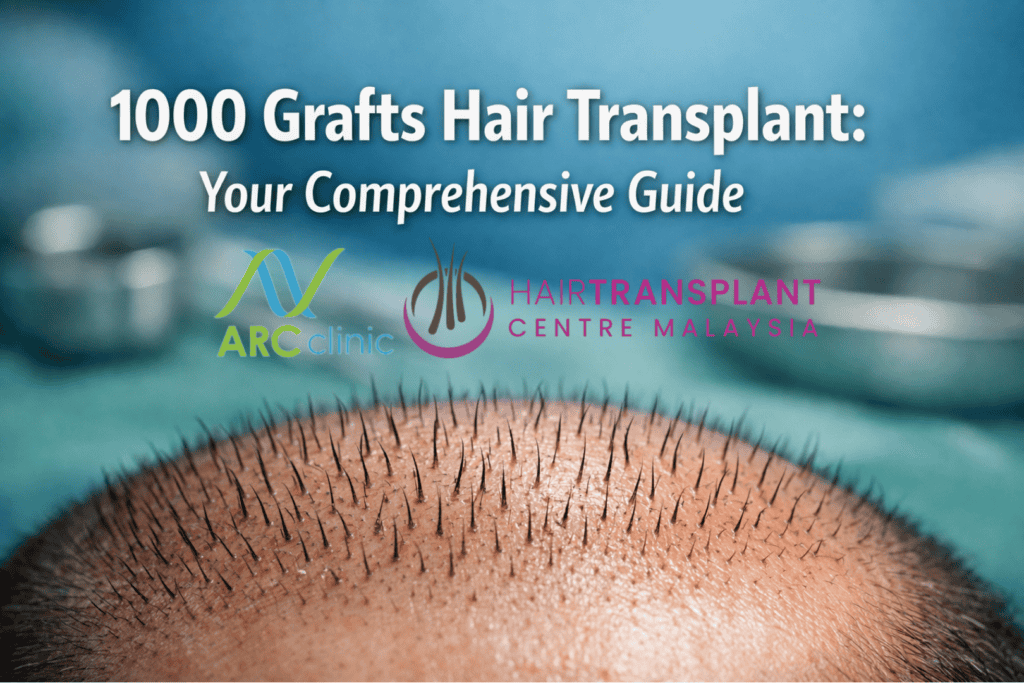
Quick Answer: A 1000 grafts hair transplant is a targeted hair restoration procedure typically used to address early stages of hair loss, refine hairlines, or enhance density in smaller, specific areas like the temples or crown. This procedure involves transplanting approximately 1000 individual follicular units from a healthy donor area to areas experiencing thinning or balding, offering a natural-looking improvement for mild to moderate hair loss.
Key Takeaways:
- A 1000 grafts hair transplant is ideal for minor hair loss, hairline refinement, or small areas of thinning.
- It provides a natural look by focusing on subtle density enhancement or targeted coverage.
- The procedure is less extensive than larger transplants, often resulting in a quicker recovery time.
- Both FUE (Follicular Unit Extraction) and FUT (Follicular Unit Transplantation) methods can be used for 1000 grafts, with FUE being more common for smaller sessions.
- Candidacy is determined by the extent of hair loss, donor hair quality, and overall health.
- Results typically become fully visible 10-12 months post-procedure, offering permanent hair growth in the transplanted areas.
- Hair Transplant Centre Malaysia offers specialized expertise, including physicians with over 10 years of experience and global health awards, ensuring world-class care for such procedures.
- The cost of a 1000 grafts transplant in Malaysia is generally more affordable compared to Western countries, making it an attractive option for many.
What Does a 1000 Grafts Hair Transplant Entail?
A 1000 grafts hair transplant involves the meticulous transfer of around 1000 follicular units from a healthy, dense area of the scalp (the donor area) to areas experiencing hair thinning or baldness (the recipient area). Each follicular unit can contain 1 to 4 hairs, meaning a 1000 grafts procedure can translate to roughly 2000 to 4000 individual hairs, depending on the patient’s hair characteristics. This method is considered a relatively small to moderate session, perfect for targeted enhancement.
The process begins with a detailed consultation, where a specialized physician assesses the patient’s hair loss pattern, donor hair availability, and desired outcome. At Hair Transplant Centre Malaysia, our physicians, including Dato’ Dr. Kuladeva Retnam and Datuk Dr. Inder, specialize in the art and science of hair restoration, ensuring personalized treatment plans. The goal is always to achieve a natural-looking result that blends seamlessly with existing hair.
For instance, a patient might seek a 1000 grafts hair transplant to fill in slight recession at the temples, create a softer, more defined frontal hairline, or increase density in a small thinning crown area. It’s often chosen by individuals who are in the early stages of hair loss or those looking for minor cosmetic improvements without undergoing a major surgical session.
Understanding Follicular Units and Grafts
A “graft” in hair transplantation refers to a follicular unit, which is a naturally occurring cluster of one to four hairs, along with its associated sebaceous gland, arrector pili muscle, and nerve supply. Transplanting these natural units is crucial for achieving a natural look, as hair grows in these clusters on the scalp.
- 1-Hair Grafts: Often used for the very front of the hairline to create a soft, natural transition.
- 2-3 Hair Grafts: Commonly used behind the hairline and in the mid-scalp for density.
- 4-Hair Grafts: Utilized in areas requiring maximum density, usually further back in the scalp.
The exact number of hairs per graft varies between individuals and even within different areas of a single scalp. This is why a skilled surgeon carefully selects and places grafts to optimize both density and natural appearance. A successful 1000 grafts hair transplant relies heavily on the surgeon’s artistry and technical precision in handling these delicate units.
Who is the Ideal Candidate for a 1000 Grafts Hair Transplant?
The ideal candidate for a 1000 grafts hair transplant typically presents with early-stage hair loss, mild hairline recession, or specific areas of low density that require subtle but significant improvement. This procedure is not usually recommended for extensive baldness across large scalp areas.
Patients often suitable for a 1000 grafts hair transplant include:
- Individuals with early frontal hairline recession: Those who notice their hairline receding slightly at the temples and wish to restore a more youthful, defined edge.
- People with mild thinning in the crown area: If the crown area is just starting to thin, 1000 grafts can effectively increase density and provide better coverage.
- Those seeking to refine an existing hairline: Some individuals may have a natural hairline but desire a slightly lower position or a more symmetrical shape.
- Patients with good donor hair density: Sufficient healthy hair in the back or sides of the scalp is crucial to provide viable grafts without depleting the donor area.
- Individuals with realistic expectations: Understanding that 1000 grafts provide targeted enhancement, not a complete transformation for extensive baldness.
A common mistake is assuming that a small number of grafts can cover a very large area. If your hair loss is more significant, you might need a higher graft count, such as 3000 grafts or more. For a clearer understanding of your specific needs, a professional consultation is essential. You can explore more about candidacy in our article: Hair Transplant: Who is The Good Candidate? – HTCM.
What Results Can You Expect from a 1000 Grafts Hair Transplant?
A 1000 grafts hair transplant can deliver noticeable, natural-looking improvements, primarily focusing on enhancing density in specific thinning areas or redefining a receding hairline. Patients can expect permanent hair growth in the transplanted regions, with final results typically becoming apparent around 10 to 12 months after the procedure.
The transformation, while not dramatic for widespread baldness, is often significant enough to boost confidence and create a more youthful appearance. For example, imagine a patient named ‘Mr. Lim’ who, in his early 30s, noticed his temples starting to recede, making his face appear older. After a 1000 grafts hair transplant at Hair Transplant Centre Malaysia, focusing on restoring his temple points, his hairline became softer and more defined. The change was subtle enough that friends commented on how “well-rested” he looked, rather than directly pointing out the transplant – a testament to a natural outcome.
Realistic Expectations vs. Misconceptions
It’s vital to have realistic expectations for a 1000 grafts hair transplant. This graft count is generally intended for:
- Filling in small bald spots: About the size of a coin or two.
- Lowering the hairline slightly: Often by a few millimeters to a centimeter.
- Increasing density in sparse areas: Making existing hair appear thicker.
It will not cover extensive baldness across the entire top of the head or create a full head of hair if significant balding is present. The transplanted hair will grow naturally, can be cut, styled, and treated like your native hair, as it retains the characteristics of the donor hair. Our team, with over 10 years of experience, ensures that patients receive clear, honest assessments of what is achievable.
The Hair Transplant Process: A Step-by-Step Guide for 1000 Grafts
The process for a 1000 grafts hair transplant is meticulously planned and executed, ensuring precision and patient comfort. While the general steps are similar to larger procedures, the shorter duration and smaller area of focus make it a less invasive experience.
Here’s a breakdown of the typical steps at Hair Transplant Centre Malaysia:
- Initial Consultation and Planning: This crucial first step involves a detailed examination of your scalp, hair loss pattern, and donor area by one of our expert physicians. Discussions will cover your aesthetic goals, determine the exact number of grafts needed (confirming if 1000 grafts is appropriate), and outline the hairline design. This is also where you’ll learn about pre-operative instructions. For more on this, see our guide: How Many Grafts Do I Need? A Simple Guide to Your Hair Transplant Consultation.
- Donor Area Preparation: On the day of the procedure, the donor area (usually the back or sides of the head) will be trimmed to a very short length to allow for precise graft extraction. Local anesthesia is then administered to numb the donor region, ensuring a painless experience during extraction.
- Graft Extraction (FUE or FUT):
- FUE (Follicular Unit Extraction): This is the most common method for 1000 grafts. Individual follicular units are carefully extracted one by one using a micro-punch tool. This leaves tiny, almost invisible dots rather than a linear scar.
- FUT (Follicular Unit Transplantation): Less common for small sessions, but still an option. A strip of skin containing hair follicles is surgically removed from the donor area, and the strip is then meticulously dissected into individual grafts under high-powered microscopes.
- Recipient Site Creation: Once the grafts are extracted, the recipient area (where hair will be transplanted) is carefully numbed with local anesthesia. The surgeon then creates tiny incisions at specific angles, directions, and depths to match the natural growth pattern of your existing hair. This step is critical for achieving a natural-looking result.
- Graft Implantation: The extracted follicular units are delicately placed into the pre-made incisions in the recipient area. The surgeon’s skill in placing each graft correctly is paramount for density, natural direction, and overall aesthetic outcome.
- Post-Procedure Care Instructions: After the procedure, you will receive detailed instructions on how to care for your transplanted and donor areas, including how to wash your hair, medications to take, and activities to avoid. This aftercare is vital for graft survival and successful healing. Our essential guide, Essential 7-Day Hair Transplant Aftercare Guide, provides comprehensive details.
The entire procedure for a 1000 grafts hair transplant can typically be completed within a few hours, depending on the chosen method and the complexity of the case. Patients are often awake during the procedure and can relax, listen to music, or watch a movie.
FUE vs. FUT: Which is Better for 1000 Grafts?
Both Follicular Unit Extraction (FUE) and Follicular Unit Transplantation (FUT) are effective methods for a 1000 grafts hair transplant, but FUE is generally preferred for smaller sessions due to its minimally invasive nature and lack of a linear scar. The choice between them often depends on individual patient factors and surgeon recommendation.
FUE (Follicular Unit Extraction) for 1000 Grafts
FUE involves extracting individual follicular units directly from the scalp using a micro-punch tool. This method is particularly well-suited for a 1000 grafts hair transplant because:
- No Linear Scar: FUE leaves tiny, punctate scars that are virtually undetectable, allowing patients to wear their hair very short if desired.
- Less Invasive: The procedure is generally less invasive, leading to quicker healing in the donor area and minimal discomfort post-operation.
- Versatility: FUE can harvest grafts from other body parts (like the beard or chest) if scalp donor hair is limited, though this is less common for only 1000 grafts.
- Precision: It allows for precise selection of individual grafts, beneficial for crafting natural hairlines.
A downside is that FUE typically requires the donor area to be shaved for optimal extraction, which might be a temporary aesthetic concern for some. However, many clinics offer “unshaven FUE” options for smaller graft counts, where only small sections are trimmed or individual hairs are trimmed, leaving the surrounding hair longer.
FUT (Follicular Unit Transplantation) for 1000 Grafts
FUT involves surgically removing a thin strip of skin from the donor area, typically the back of the head, which is then dissected into individual follicular units under magnification.
- Higher Graft Yield (for larger sessions): While not as critical for 1000 grafts, FUT can typically yield a very high number of grafts from a single session.
- No Shaving Required: The donor area does not need to be shaved, as the strip is removed from an area that can be covered by surrounding hair.
- Cost-Effective (sometimes): For very large sessions, FUT can sometimes be more cost-effective per graft due to the efficiency of harvesting.
The primary disadvantage of FUT is the linear scar it leaves in the donor area, which may be visible if hair is worn very short. However, for a 1000 grafts transplant, the strip taken would be quite small, and a skilled surgeon can often make the scar very fine and inconspicuous.
Decision Rule: Choose FUE if you prefer no linear scar, quicker donor area recovery, or want to wear your hair very short. Choose FUT if you absolutely do not want to shave your donor area and are comfortable with a linear scar that can be hidden by longer hair. For a small 1000 grafts hair transplant, FUE is often the go-to recommendation due to its aesthetic benefits and minimal invasiveness.
How Much Does a 1000 Grafts Hair Transplant Cost in Malaysia?
The cost of a 1000 grafts hair transplant in Malaysia is a significant consideration for many patients, often proving to be more affordable than similar procedures in Western countries while maintaining high standards of care. Prices can vary based on several factors, including the clinic’s reputation, the surgeon’s experience, the method used (FUE vs. FUT), and the specific services included in the package.
At Hair Transplant Centre Malaysia, we pride ourselves on providing world-class hair transplant procedures with transparent pricing. While exact figures are best obtained through a personalized consultation, a 1000 grafts hair transplant typically falls into a specific range. For comparison, you can explore our detailed articles on Hair Transplant Cost Malaysia and Malaysia vs. World: Hair Transplant Cost Comparison.
Factors Influencing the Cost
Here are the key elements that contribute to the overall price:
- Clinic Reputation and Facilities: Established clinics with state-of-the-art equipment and a strong track record often have higher costs. Hair Transplant Centre Malaysia, for example, is a specialized unit known for its dedication to world-class procedures.
- Surgeon’s Expertise: Physicians with extensive experience, such as Dato’ Dr. Kuladeva Retnam (Plastic and Reconstructive Surgeon) and Datuk Dr. Inder (with over 30 years of experience), command higher fees due to their specialized skills and proven results. Dr. Ashrul Ikhmal, a special trainee doctor under their mentorship, also contributes to the clinic’s high standards.
- Hair Transplant Method: FUE is often slightly more expensive per graft than FUT because it is a more labor-intensive and time-consuming process for extraction. For 1000 grafts, this difference might be less pronounced than for larger sessions.
- Geographic Location within Malaysia: Clinics in major cities like Kuala Lumpur might have slightly different pricing structures compared to those in other regions due to operational costs. Our center in Petaling Jaya offers convenient access to high-quality care.
- Included Services: Some clinics offer all-inclusive packages that cover pre-operative consultations, post-operative care, necessary medications, and follow-up appointments. Always clarify what is included in the quoted price.
- Promotions and Packages: Occasionally, clinics may offer special promotions or packages. It’s always worth inquiring about current offers, as seen on our Hair Restoration Promotion page.
While cost is a factor, prioritizing the quality and experience of the medical team is crucial. Choosing a clinic solely based on the lowest price can lead to unsatisfactory results, as highlighted in “Is a Cheap Hair Transplant Worth the Risk?”
Healing and Growth Timeline After a 1000 Grafts Hair Transplant
The healing and growth journey after a 1000 grafts hair transplant is a gradual process that requires patience, with visible results taking several months to fully develop. Understanding this timeline helps manage expectations and ensures proper post-operative care.
Here’s a general overview of what to expect:
- Day 1-7: Immediate Post-Op & Initial Healing:
- Appearance: The transplanted area will have tiny scabs around each graft and some redness. The donor area will also show signs of healing (small red dots for FUE, a thin line for FUT).
- Care: Strict adherence to post-operative instructions is critical, including gentle washing (often starting the next day), taking prescribed medications, and avoiding strenuous activities. Our guide on Why Next Day Hair Wash Is Crucial After a Hair Transplant offers key advice.
- Sensation: Mild swelling or discomfort is normal and usually managed with prescribed pain relievers.
- Weeks 2-4: Scab Shedding & Donor Healing:
- Appearance: Scabs will typically begin to fall off, and the redness in the recipient area will gradually subside. The donor area will continue to heal.
- Shedding Phase: Many of the transplanted hairs will shed during this period. This is a normal and expected part of the process, making way for new hair growth. Do not be alarmed!
- Months 2-3: “Ugly Duckling” Phase:
- Appearance: The transplanted area may look thinner than before, as most of the transplanted hairs have shed and new growth hasn’t fully begun. This is sometimes called the “ugly duckling” phase.
- Months 3-4: Early Growth Begins:
- Appearance: New, fine hairs will start to emerge from the transplanted follicles. These hairs may initially be thin and light but will gradually thicken over time.
- Months 6-8: Significant Growth:
- Appearance: Noticeable growth becomes evident. The new hairs are thicker and longer, and you’ll start to see a significant improvement in density and coverage in the transplanted areas.
- Months 10-12: Final Results:
- Appearance: The transplanted hairs have typically matured, achieving their final thickness and texture. The full cosmetic result of your 1000 grafts hair transplant should be visible.
- Ongoing Care: Continue to follow any long-term advice from your physician, which may include using specific hair products or medications to support overall hair health.
It’s important to remember that individual healing and growth rates can vary. Factors like age, general health, and adherence to post-operative care can influence the timeline. Patients are encouraged to maintain open communication with their clinic throughout this period.
The Long-Term Outlook for a 1000 Grafts Hair Transplant
The long-term outlook for a 1000 grafts hair transplant is generally excellent, with the transplanted hairs designed to last a lifetime. This is because the grafts are typically harvested from the donor area, usually the back and sides of the head, where hair follicles are genetically resistant to the effects of dihydrotestosterone (DHT), the hormone responsible for male pattern baldness.
Once these resistant follicles are transplanted to the thinning or balding areas, they retain their genetic resistance and continue to grow normally. This provides a permanent solution for the specific areas where the 1000 grafts were placed.
However, it’s crucial to understand a few long-term considerations:
- Continued Native Hair Loss: While the transplanted hair is permanent, your existing native hair in other areas of the scalp may continue to thin or fall out due to ongoing genetic predisposition. This is a common misconception; a transplant does not stop future hair loss in untreated areas. For example, if you had 1000 grafts transplanted to your hairline, but the hair on your crown continues to thin, you might consider further treatment or a second transplant session down the line. Our article, Hair Transplantation: Will I Need A Second Hair Transplant?, delves into this possibility.
- Maintenance: To preserve the overall health of your hair and potentially slow down further native hair loss, your physician might recommend certain medications (like Finasteride or Minoxidil) or treatments (like PRP). These are not for the transplanted hairs but for the surrounding native hair.
- Natural Aging: As with all hair, transplanted hair will also age naturally, potentially graying or becoming finer over many decades.
- Donor Area Preservation: For a 1000 grafts transplant, the impact on the donor area is minimal. However, if future, larger transplants are considered, it’s vital to manage the donor supply wisely.
Ultimately, a 1000 grafts hair transplant provides a durable and natural-looking solution for targeted hair restoration, offering renewed confidence and a lasting improvement to your appearance. The expertise of a clinic like Hair Transplant Centre Malaysia, with its experienced surgeons and dedicated focus on hair restoration, ensures the best possible long-term outcomes.
Why Choose Hair Transplant Centre Malaysia for Your 1000 Grafts Hair Transplant?
Choosing the right clinic for a 1000 grafts hair transplant is paramount to achieving successful, natural-looking results. Hair Transplant Centre Malaysia, a specialized unit formed by ARC Clinic, stands out as a world-class destination for hair restoration, particularly for precise procedures like a 1000 grafts transplant. Our commitment to excellence, experienced medical team, and patient-centric approach make us a leading choice in the region.
Here’s why patients consistently choose us:
- Specialized Expertise in Hair Restoration: Our physicians specialize exclusively in the art and science of hair restoration. This dedicated focus means our team is always at the forefront of the latest techniques and advancements. We don’t just perform hair transplants; it’s our primary passion and expertise.
- Highly Experienced Surgeons: Our team boasts physicians with extensive experience, many having at least ten years in performing hair restorations. This includes renowned experts like Dato’ Dr. Kuladeva Retnam, a Plastic and Reconstructive Surgeon, and Datuk Dr. Inder (DPSM), an LCP holder with over 30 years of experience in treating hair loss and an active member of the ISHRS. Dr. Ashrul Ikhmal, an Associate Member of the International Society of Hair Restoration Surgery (ISHRS), further strengthens our team. This collective experience ensures precision and artistry in every 1000 grafts procedure.
- In-Depth Training and Artistic Skill: Our physicians undergo in-depth training to master the unique artistry and techniques required for natural-looking hair restoration. This includes meticulous planning for hairline design, graft placement, and density optimization, which are critical for even a small 1000 grafts hair transplant.
- Global Recognition and Awards: Our physicians have received numerous honors and awards for excellence in hair restoration surgery, demonstrating our commitment to global standards of quality and results.
- World-Class Facility and Patient Care: Located at 102 Jalan Gasing, Petaling Jaya, Selangor, our center provides a comfortable, state-of-the-art environment. We prioritize patient comfort and safety, ensuring a smooth and positive experience from consultation through to post-operative care.
- Tailored Treatment Plans: We understand that every patient’s hair loss is unique. Our approach involves personalized consultations to assess your specific needs and design a treatment plan that perfectly matches your aesthetic goals for a 1000 grafts hair transplant.
- Competitive Value: Malaysia is recognized as a top destination for medical tourism, offering world-class medical services at a more accessible price point than many Western countries, without compromising on quality or results. This makes a 1000 grafts hair transplant in Malaysia an excellent investment. For more information, read: Why Malaysia is a Top Destination for Hair Transplant.
Choosing Hair Transplant Centre Malaysia means entrusting your hair restoration to a team that combines decades of experience, advanced techniques, and a genuine passion for helping you regain your confidence with natural, lasting results.
Frequently Asked Questions About 1000 Grafts Hair Transplant
How much area can 1000 grafts cover?
1000 grafts can effectively cover a small to moderate area, such as a receding hairline (e.g., temples), a small bald spot in the crown, or provide density to a specific thinning region about the size of a credit card or two.
Is 1000 grafts enough for a receding hairline?
Yes, 1000 grafts can often be sufficient to address early stages of a receding hairline, especially for refining the temple points or slightly lowering the front hairline. More extensive recession might require additional grafts.
Will 1000 grafts look natural?
When performed by an experienced surgeon, 1000 grafts will look very natural. The key is precise placement of follicular units in the correct direction and density to blend seamlessly with existing hair.
How long does a 1000 grafts hair transplant take?
A 1000 grafts hair transplant typically takes between 3 to 5 hours, depending on the chosen method (FUE is generally longer per graft than FUT for harvesting, but less overall time for smaller sessions) and the surgeon’s technique.
What is the recovery time for a 1000 grafts hair transplant?
Initial healing for the donor and recipient areas usually takes about 7-10 days, during which scabs form and shed. Most patients can return to light activities within a few days, with full recovery within 2-4 weeks.
Can 1000 grafts be done using both FUE and FUT methods?
Yes, 1000 grafts can be done using both FUE and FUT. FUE is often preferred for this graft count due to its scarless donor area healing, but FUT remains an option, especially if the patient does not wish to shave their head.
Will I need to shave my head for a 1000 grafts FUE transplant?
For a standard FUE procedure, the donor area typically needs to be shaved. However, some clinics offer “unshaven FUE” for smaller graft counts, where only the individual donor hairs are trimmed, or small hidden sections are shaved.
When will I see results from a 1000 grafts hair transplant?
New hair growth typically begins around 3-4 months after the transplant. Significant growth is usually visible by 6-8 months, with the final, mature results taking 10-12 months to fully appear.
Is a 1000 grafts hair transplant painful?
The procedure is performed under local anesthesia, so it is generally not painful during the surgery itself. Some mild discomfort, swelling, or soreness may occur in the days following the procedure, which can be managed with prescribed pain medication.
Can women get a 1000 grafts hair transplant?
Yes, women can absolutely get a 1000 grafts hair transplant, often to address receding hairlines, temple thinning, or to increase density in specific areas. The principles and results are similar to those for men. For more, see: All You Need to Know About Female Hair Transplant.
What is the success rate for a 1000 grafts hair transplant?
When performed by a skilled and experienced surgeon at a reputable clinic, the success rate for graft survival in a 1000 grafts hair transplant is very high, typically exceeding 90-95%.
Are the results of a 1000 grafts hair transplant permanent?
Yes, the results are considered permanent. The transplanted hair follicles are genetically resistant to hair loss and will continue to grow naturally for a lifetime in their new location.
Conclusion
A 1000 grafts hair transplant offers a precise and effective solution for individuals experiencing early-stage hair loss, seeking hairline refinement, or aiming to enhance density in smaller, targeted areas. It’s a procedure that, when performed by experienced professionals, yields natural-looking, permanent results without the extensive recovery associated with larger transplant sessions. Understanding the process, managing expectations, and choosing a reputable clinic are critical steps toward achieving successful outcomes.
For those considering a 1000 grafts hair transplant in 2026, Hair Transplant Centre Malaysia stands as a beacon of excellence. With our team of globally recognized, highly experienced physicians – including Dato’ Dr. Kuladeva Retnam, Datuk Dr. Inder, and Dr. Ashrul Ikhmal – we are dedicated to providing world-class hair restoration services. Our commitment to in-depth training, advanced techniques, and personalized care ensures every patient receives an outcome that not only restores their hair but also boosts their confidence. If you’re ready to explore how a 1000 grafts hair transplant can transform your appearance, we encourage you to schedule a consultation with our expert team to discuss your specific needs and embark on your journey to natural hair restoration.
Visualize Your 1000 Grafts Hair Transplant Coverage
Explore how 1000 grafts can make a difference for different areas of hair loss. Click on an option to see a visual representation of typical coverage.